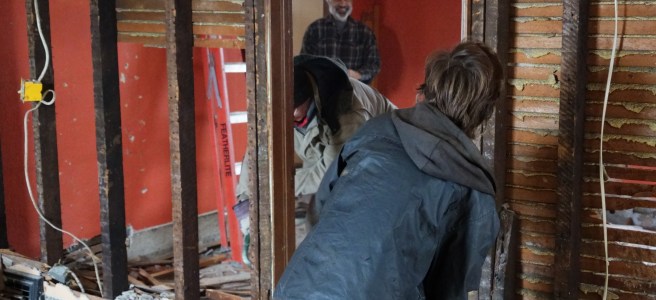
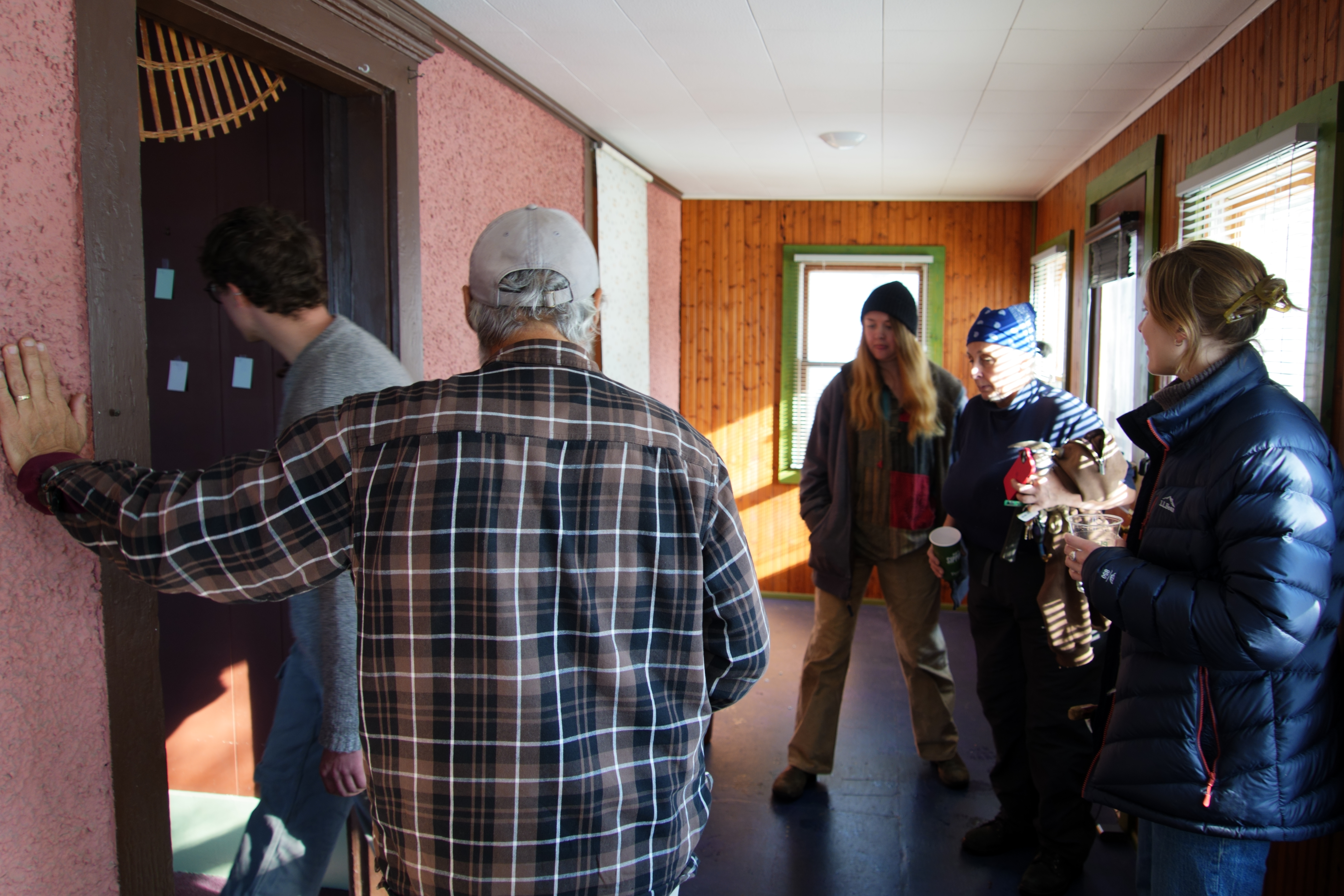
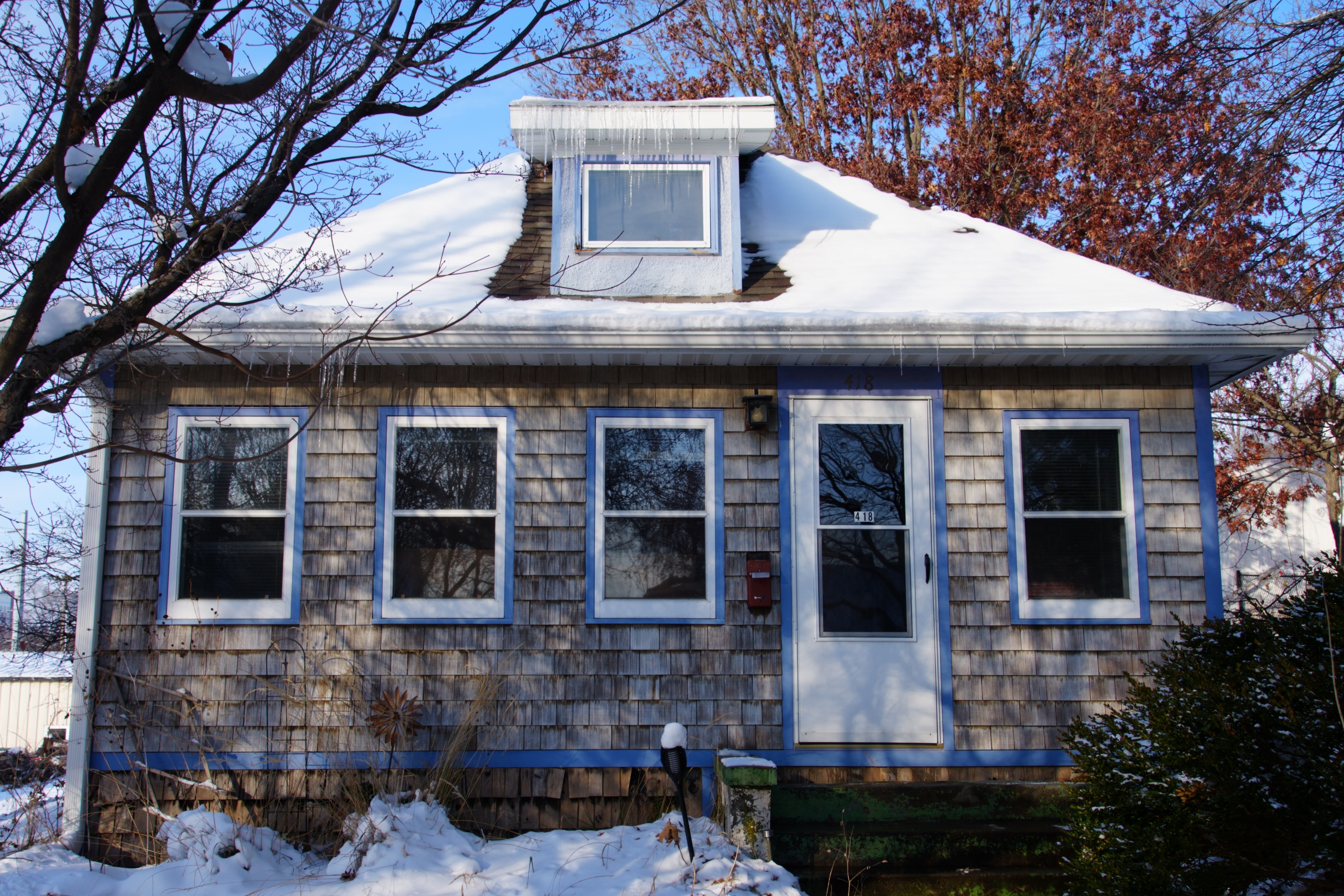
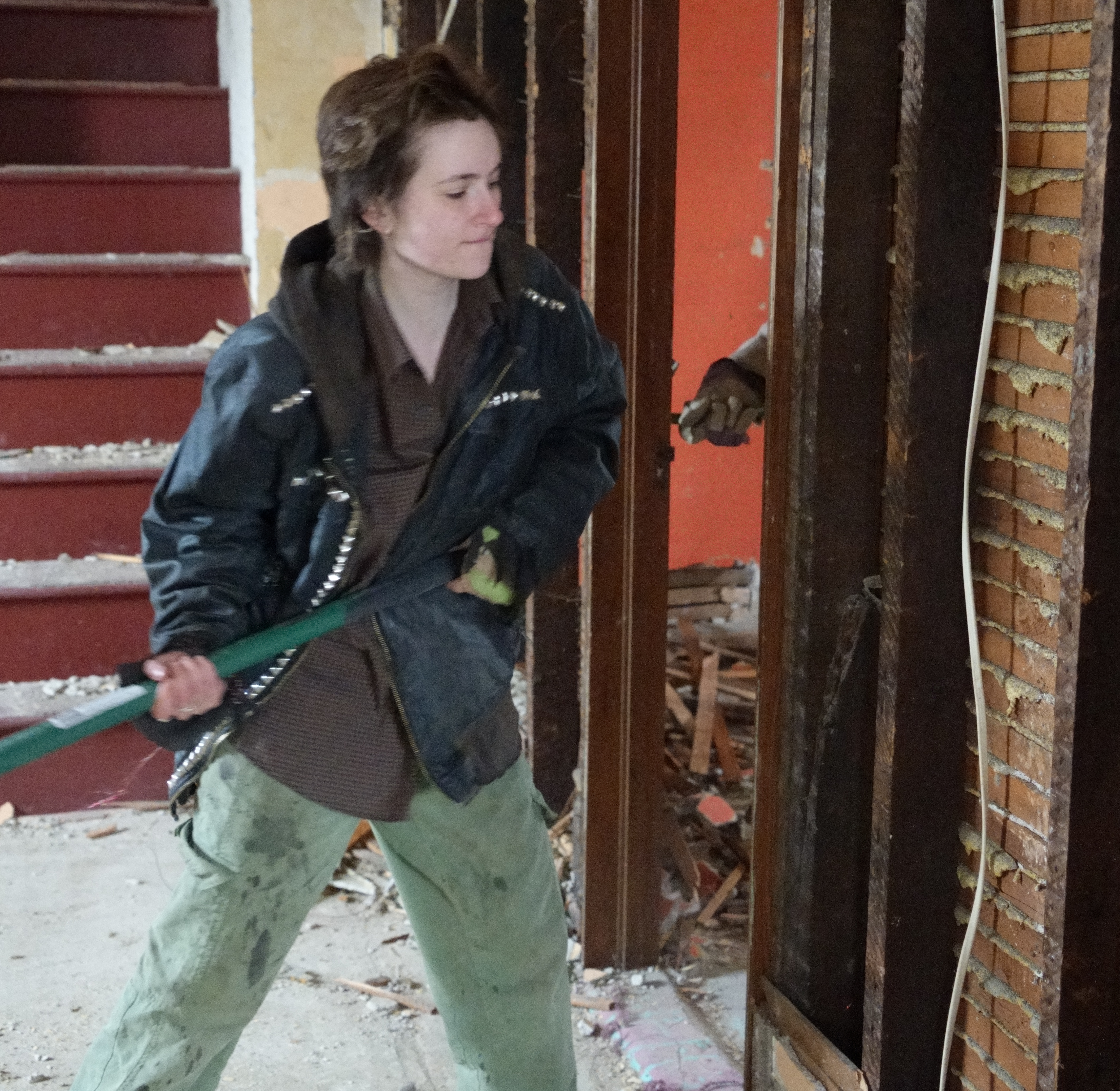
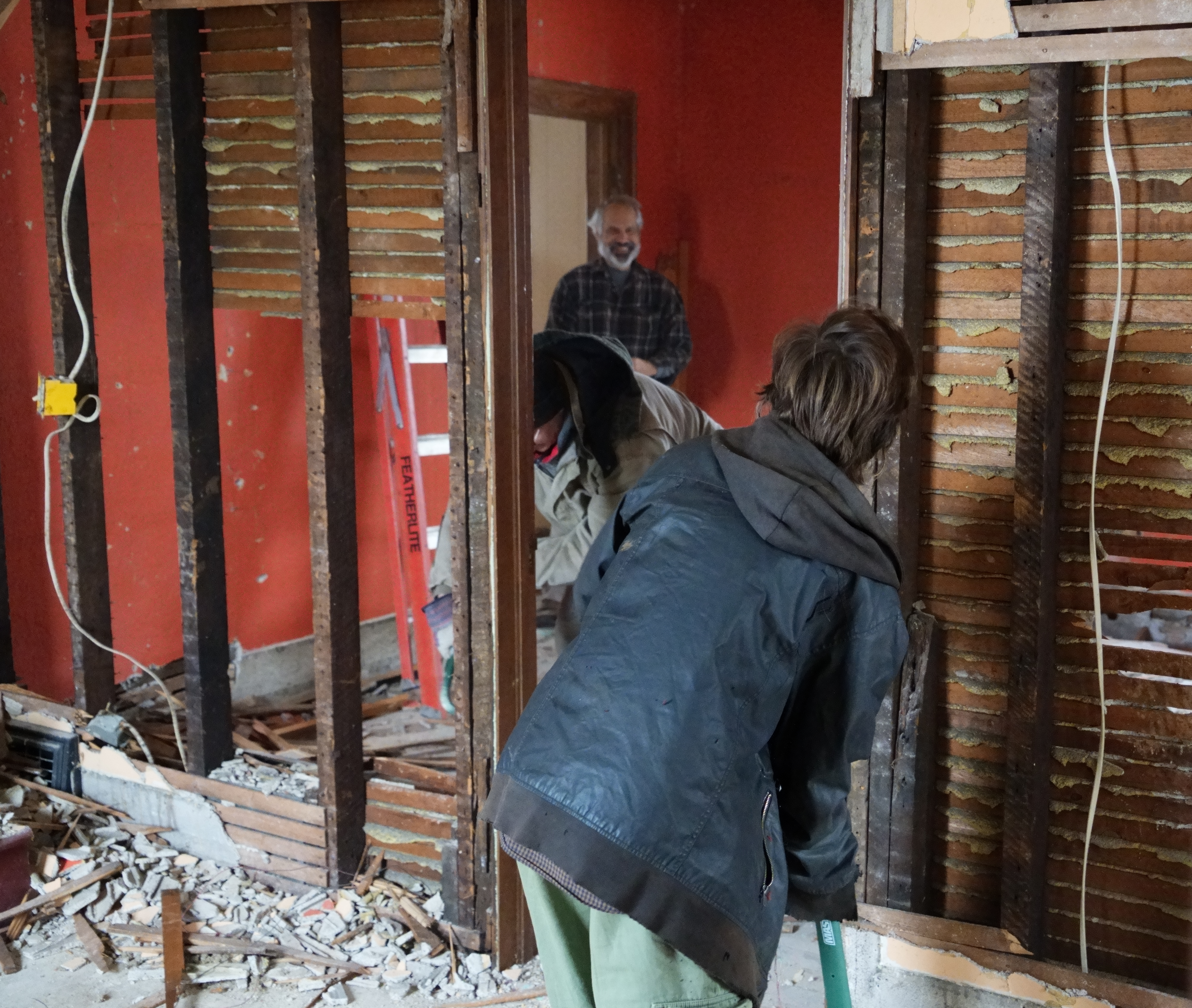
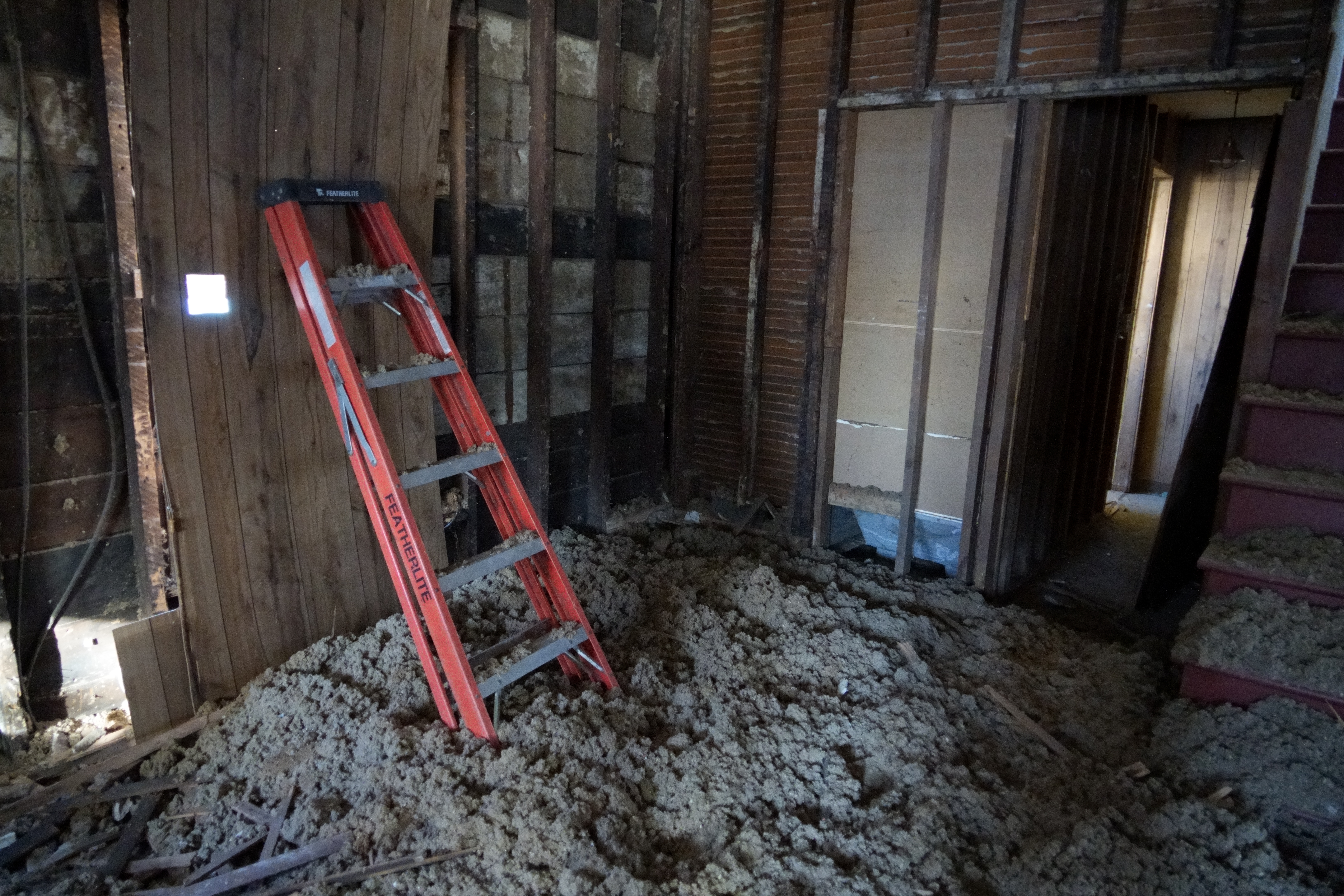
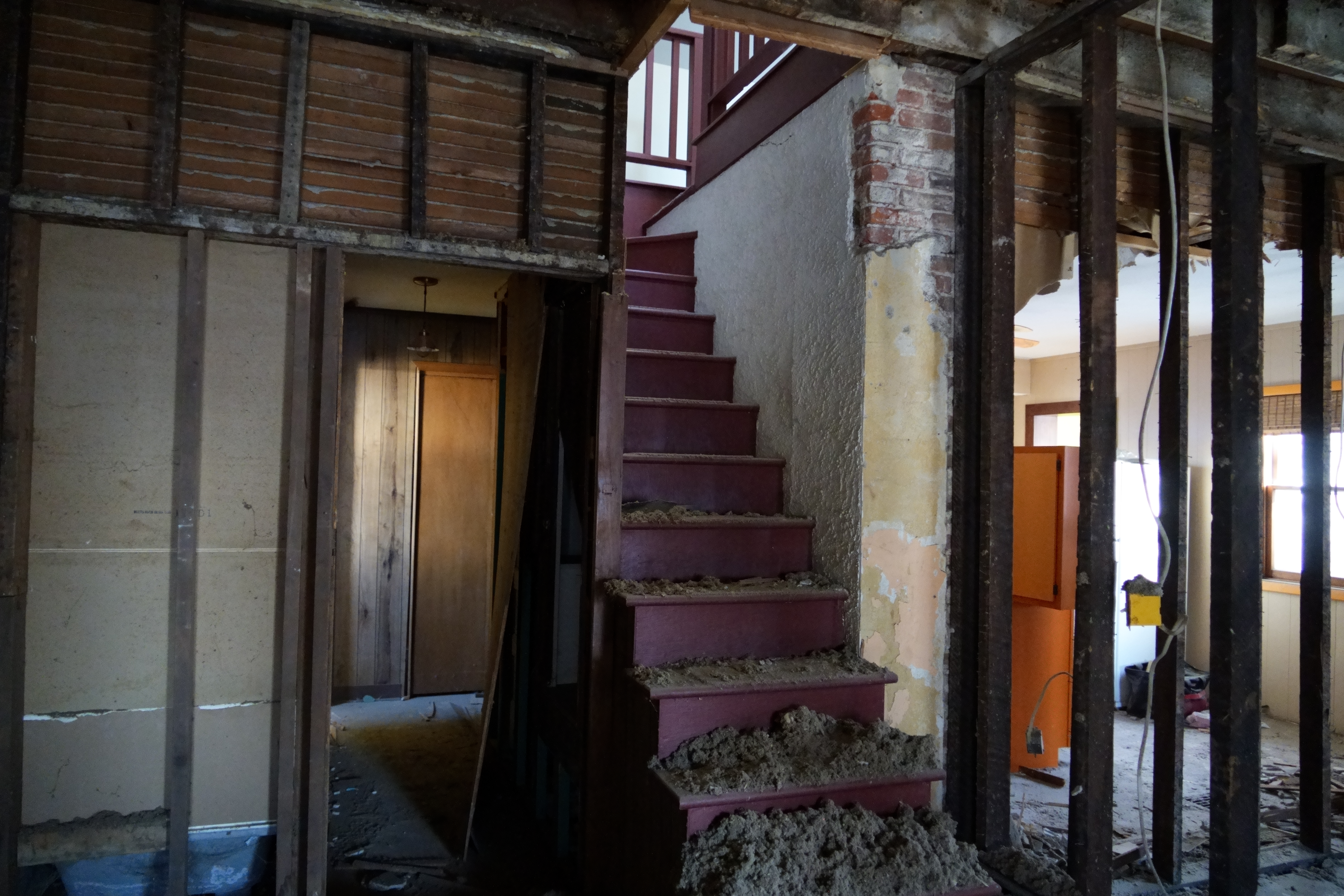
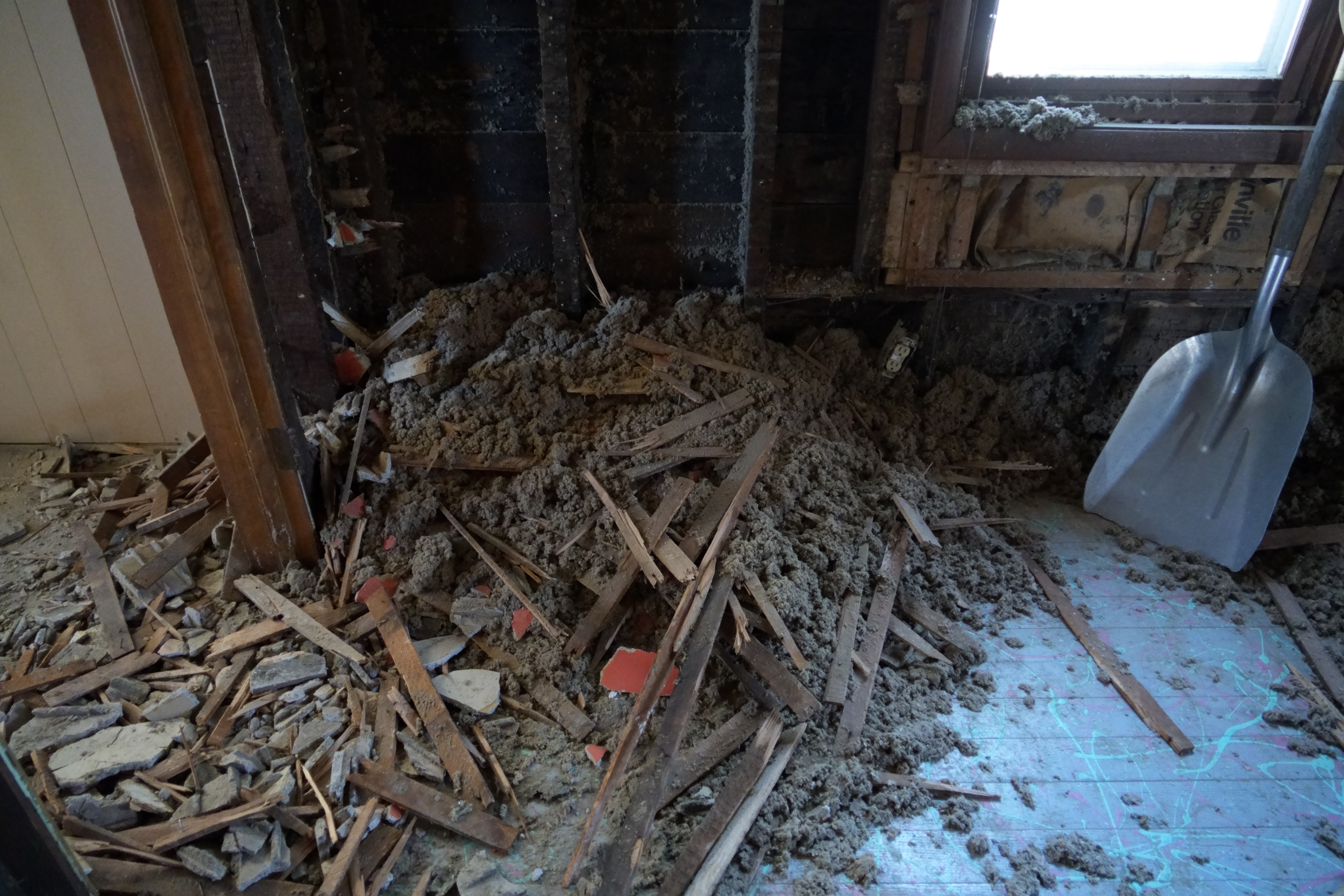
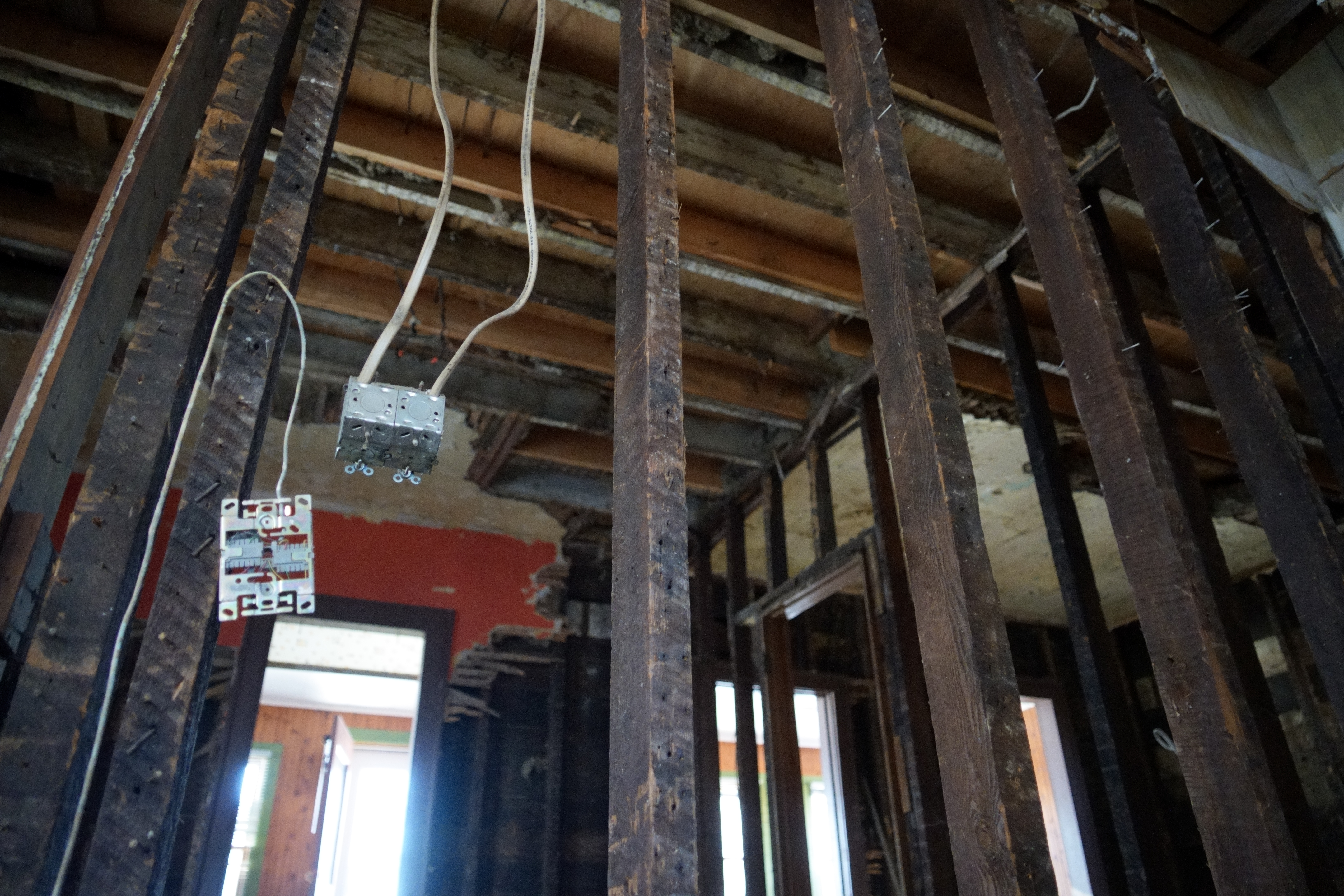
We began the demolition of the Healing Justice House several days ago. Scattergood Friends School is included in the title to these blog posts because some people working on the demolition, including me, have been hosted at the school.
Another part of Scattergood’s involvement is that I was so glad to be able to share about this work during the whole school community meeting yesterday afternoon.
As I sat this morning, wondering how I might describe this project and its significance, I naturally (for me these days) turned to my go-to system for research and creation of educational materials, Google’s NotebookLM. And, as always, I’m blown away by what was created. I’m aware of the uninformed public’s reactions to “artificial intelligence”, but that is not what this is about. NotebookLM is a new type of AI application that has a very specific purpose, which is to only work with the sources of information you load into your notebook. This includes using your own images in the videos, reports, infographics, etc. that you can ask it to produce. Some my images are included “Building the Future” and in the photo gallery below
You can judge for yourself the quality of the educational products it can produce, some of which are included below.
I arrived at Scattergood Friends School and Farm Sunday where I’ve been staying so I can go into nearby Iowa City to help with the beginnings of the renovation of the acre of land the Great Plains Action Society (GPAS) recently acquired, or would it be re-acquired? This is an example of the idea of LANDBACK, returning land to Indigenous sovereignty. The land was not voluntarily returned, but had to be purchased. Similar to the Meskwaki nation buying the land of their Settlement. 80 acres in Tama County, Iowa, was purchased on July 13, 1857, after Iowa passed a law in 1856 allowing them to live and buy land in the state.
Because of the significant snowfall, beginning work at GPAS was delayed a day for snow removal and the impact on travel plans.
That turned out to be a blessing, as I was able to spend the time at Scattergood. As I arrived students and staff were working on clearing the snow.
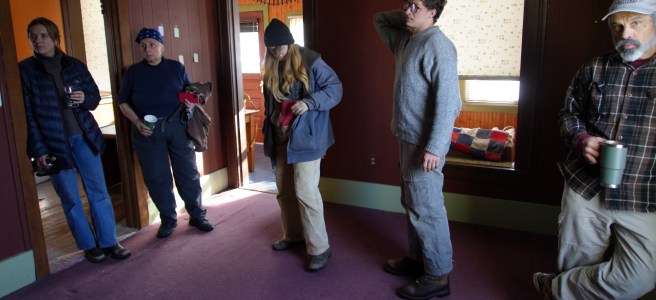
Sam Taylor has been my main contact at Scattergood. We talked a bit about the GPAS project, which he and the school have been connected with, including hosting people who were going to be working on the project this week. Besides me, Phil is also staying here. He had not been to Scattergood before. Sikowis and Sam have been having conversations about ways Scattergood students can be involved with GPAS’s work in Iowa City.
I haven’t been sleeping well at all, my mind on fire with memories of the years I spent at Scattergood (class of 1970). Reflecting on how every one of the main themes of my life found their beginnings there. Benefitting from the focus on developing critical thinking skills. And the continuation of experiences of living in Quaker faith based communities and having those experiences with people who became life long friends.
An interesting thing happened related to those times. Sam told me about a time capsule that had recently been discovered during construction in what had been the boys dorm, mentioning that I had written something there, which I had no memory of. When Sam showed it to me, almost every note was written by the boys in MY class! Scattergood planned to share the contents but hadn’t done anything with it, yet, so I volunteered to do so. I carefully unfolded each note, and took photos of each, and of the other objects in one of those cans Christmas cookies come in, and put them into a PowerPoint slide presentation, which I gave to Sam. I’ll only share the three things that related to me.
Students of the future, ban nuclear weapons! Jeff Kisling, Chairman, Atomic Energy Commission. I guess I had a little sense of humor then. In Junior high school I had developed an intense interest in nuclear energy, subatomic particles, etc, much to the chagrin of my parents when I kept receiving information from the Atomic Energy Commission in the mail. I planned to major in physics in college, but other things happened.
The other main themes of my life that began at Scattergood included learning how to work in the school’s darkroom, which also came in handy when I worked on the yearbook at Earlham College. One of the most popular things I did during my two years at the Friends Volunteer Service Mission in Indianapolis (after a year at Earlham College) was teach the neighborhood kids how to develop film and photos in the darkroom I would set up in the bathroom. I asked Friends to donate used 35 mm cameras, and we would ride our bicycles around Indianapolis taking photos.
Dennis Anderson, Friends Volunteer Service Mission, Indianapolis, 1971
My career in computer science also began at Scattergood. The late 1960s were early years in computing, with no personal computers as we know them. The University of Iowa gave free computer time to the area high schools. My math teacher at Scattergood suggested I buy the book, Learning FORTRAN, which I did, teaching myself the language. Each week I’d go into the University of Iowa computer center and punch the computer cards with my program, which was submitted to be run on the mainframe. Several hours later the stack of perforated computer paper would be available, usually with errors. A single typographical error would cause the program to crash. So I’d fix that, resubmit, and several hours later get those results, often containing other errors.
One of my main roles in the Infant Pulmonary Function Lab was designing the software systems that controlled and analyzed the research we did there. I began work in the lab in the early 1980s after several years of clinical experience in neonatal intensive care, and worked there the rest of my professional life. There were only half a dozen such research labs in the world, so there was no incentive for a company to develop pulmonary function testing systems for infants. That meant that each lab had to develop their own hardware and software systems. We were each focused on different things, so there was no opportunity to share these systems with each other.
Besides engineering the software systems, I also had to engineer the hardware to perform the studies,. Once again, Scattergood set me on another path. Don Laughlin, an Iowa Yearly Meeting (C) Quaker and friend found the funds to hire me to work in his medical electronics lab at the University of Iowa Hospitals during the summer prior to me Senior year at Scattergood. The hospital had just bought one of the first desktop computers and my job was to program it to automate the many complex calculations that had to be done manually to analyze patient’s pulmonary function tests. While there, he also taught me about medical electronics and how to solder components to circuit boards. That started my interest in medicine.
In our research lab at Riley Hospital, that experience was really helpful because I also had to discover the hardware needed to perform the testing we did on babies, and calculate and analyze the results. I soon became acquainted with the engineers at the Hans Rudolph company in Kansas City on a first name basis. They produced a wide range of respiratory medicine equipment which we used. But many of those components had to be re-engineered for us before we could use them for testing such small patients.
We had transducers to measure pressures, pneumotachs to measure flow and volume, a mass spectrometer to measure gas concentrations down to hundreds of a percent. All of which had to be calibrated prior to each test. Some of the signals had to be time shifted. Each instrument was read 100 times per second, and the results displayed in real time so we could monitor the testing.
This is from a very early version of our testing systems. The baby is mildly sedated with an oral sedative so they will tolerate have the mask on their face as show below.
The last software system we created took three years to develop, but in the end we became the only lab in the world that could measure the diffusion of gases in the infant lung.
As we learned more our research expanded to other, related fields. In the end we were working with researchers in maternal medicine doing basic science research related to cells from which the fetal circulation grew.
The invitation extended to the Iowa Yearly Meeting (Conservative) to participate in the renovation of the Great Plains Action Society’s (GPAS) Healing Justice Center represents a pivotal moment in contemporary Quaker witness.
This invitation is an opportunity to take part in meaningful and practical work toward decolonial repair. Right now in Iowa City, the Great Plains Action Society (GPAS) is beginning a project that’s more than just a vision—it’s a real, on-the-ground effort to shape what a more just future looks like for Indigenous communities. GPAS is building the actual infrastructure to make it happen and inviting partners to join in.
This map is my vision for Quaker meetings of Iowa Yearly Meeting (Conservative) to support the Healing Justice House. Scattergood Friends School is offering lodging for those who will be helping with this renovation, which is from November 30th to December 6th
This project is the 1.2-acre Urban Resilience and Innovation Hub, an endeavor that is far more than an assembly of sustainably retrofitted buildings and innovative programs. It is, in the words of its creators, a “true testament to Indigenous Futurism where our worldviews and lifeways can help reimagine the world”. This vision represents a deliberate and powerful shift in methodology. For generations, Indigenous resistance has necessarily been a “posture of reactive protest”. This work, while essential, is also acknowledged by GPAS leadership as being inherently “traumatic”. The Hub represents a courageous and healing evolution: a move from this state of constant resistance toward the proactive, joyful, and sovereign act of creation. GPAS, an organization forged in the crucible of the NoDAPL resistance at Standing Rock and in Iowa, is now leading the way “from protest to prototype”. They are building a working model of a decolonized, resilient, and sustainable world.
I wanted to show this diagram to those who haven’t been engaged with this work, yet, to give an overview of how these pieces have been coming together over the past eight years.
Storybook: The House with a Heartbeat
A story about renovating Great Plains Action Society’s Healing Justice House in Iowa City.
Helping renovate the Healing Justice House with the Great Plains Action Society (GPAS) is a great opportunity for us to accomplish some decolonial repair and an example of centering Indigenous leadership.
I want to be clear that the following groups are currently doing their work on decolonial repair and are loosely associated with each other. The hope is more intentional and deeper connections will continue to be made. For example, while work has been done by Iowa Yearly Meeting (Conservative), my yearly meeting, there is not yet a direct connection to other organizations shown below. There are a small number of IYM(C) Friends involved with Des Moines Mutual Aid, the Decolonial Repair Network, and/or the Great Plains Action Society.
I wanted to show this diagram to those who haven’t been engaged with this work, yet, to give an overview of how these pieces have been coming together over the past eight years.
In Iowa City, a groundbreaking initiative is taking shape that transcends conventional definitions of a community center, an urban farm, or aneconomic incubator. The Great Plains Action Society (GPAS), an Indigenous-led organization, is in the process of acquiring and developing 1.2 acres of land to establish an Urban Resilience and Innovation Hub [1]. This project, however, is far more than an assembly of buildings and programs; it represents a profound and tangible manifestation of Indigenous Futurism. The hub is conceived as a radical act of world-building, a space where Indigenous epistemologies and lifeways move from the theoretical realm into applied, everyday practice. It stands as a direct, material response to the intertwined legacies of ecological devastation and social injustice born from colonialism, while simultaneously serving as a proactive blueprint for a decolonized, resilient, and sustainable future.
The Indigenous-led Great Plains Action Society – a key partner in the work of both Honor Native Land Fund (HNLF) and Decolonial Repair Network (DRN) – is seeking volunteers to help with renovating their Healing Justice House in Iowa City, IA. Their vision is below. Dates: Sunday, November 30th — Saturday, December 6th. No matter your skills, you are welcome to join in! Del (of Niskithe Prayer Camp and DRN) and Jack (of Dancing Rabbit eco-village and DRN) will be main work leaders alongside Sikowis Nobiss of GPAS.
Housing for 7 folks is available at the nearby Scattergood guest house. (Breakfast is at 8:00a; Dinner at 6:15pm.)
We are also looking into other housing possibilities.
Please email me if you are able to join for all or part of this important renovating work (and/or also bringing meals, offering housing, funds, etc.) eric.anglada@gmail.com
As Great Plains Action Society writes of their new Resiliency and Innovation Hub, “This hub is a reclamation of Indigenous and Matriarchal agency that will help the community work towards environmental and social justice. Essentially this a true testament to Indigenous Futurism where our worldviews and lifeways can help reduce carbon emissions through community building, reimagine the world and establish a just economy.”
Great Plains Action Society’s Healing Justice space will be located in a residential house that will be renovated. GPAS works in community with several forward thinking therapists and social workers who are currently forming a BIPOC Healing Collective. We plan to provide a space for this collective to carry out healing justice work, which is important for several reasons.
Holistic Approach: It recognizes that individual health is inextricably linked to community health and the social determinants of health, such as education, housing, and economic opportunities.
Challenging Dominant Paradigms: Healing justice challenges dominant Western medical paradigms, which often prioritize individualism, pathology, and profit over collective well-being and social justice.
Fostering Collective Liberation: Healing justice is rooted in the understanding that individual healing is linked to collective liberation.
Cultivating Resilience: Healing justice acknowledges the resilience and strength of marginalized communities, which have survived and resisted centuries of oppression. It seeks to amplify and support these existing strengths, rather than imposing external solutions.
Promoting Policy Change: Healing justice informs policy changes that address the social determinants of health, such as education, housing, and economic opportunities.
By acknowledging the importance of healing justice, we can work towards creating a society that values collective well-being, addresses historical trauma, and promotes social justice for all.
Throughout the month of September will be legal proceedings regarding the challenges to the Wisconsin DNR’s permits for Enbridge’s Line 5 Relocation Project, a proposed 41-mile extension of the Line 5 pipeline around Bad River Reservation. Midwest Environmental Advocates (MEA, representing various environmental groups), Clean Wisconsin, and the Bad River Band each issued legal challenges to the permits over concerns about inadequate environmental protections and violations of Mashkiiziibii’s (Bad River Band’s) treaty rights and tribal sovereignty. Proceedings will begin at 9 am each day. Attending the hearings is a good way to show the presiding judge that this is an important issue to Wisconsinites, to connect with other people passionate about this issue, and also an opportunity to share conversation and materials related to colonial harm and decolonial repair.
9/11 Food & Faith Summit at Mt Zion
When: Thursday, September 11th from 13:00-16:00 (1-4pm) Where: Mt Zion Baptist Church, 2019 Fisher St, Madison, WI 53713
“The Food & Faith Summit will bring together religious leaders for multi-faith networking and strategic brainstorming about food insecurity in Dane County. Despite differences in theological and spiritual imperatives, the mandate for compassion towards those in need—especially the hungry—is deeply ingrained across belief systems. REAP Food Group will present the Dane County Food Action Plan, a community-centered initiative developing a comprehensive strategy for our regional food system through collaborative, inclusive processes that ensure all stakeholder voices are heard and integrated. We invite multi-faith leaders to the table to discuss and strategize how the broader faith community can contribute to our shared mandate: ensuring food as a human right.”
9/22 Community discussion of film SUGARCANE with Land Justice Futures
When: Monday, September 22nd, 2-3:15 pm CT Where: Online, sign up at this link: SUGARCANE
On September 22nd, Land Justice Futures will be hosting a community discussion of the award-winning documentary SUGARCANE, a moving, cinematic portrait of a community reckoning with a groundbreaking investigation into abuse and death at an Indian residential school. If you are committed to accountability from Catholic/Christian institutions and repair with Indigenous communities, please invite your community members to watch the film with you and join us in conversation!
PLEASE NOTE: This event is not a screening of the film, but a community conversation guided by Land Justice Futures. Registrants will receive a special link to view the film at their own convenience. We ask that registrants watch the 1 hour 49 minute film in the weeks before the community discussion. After grounding in some shorter clips from the film, our time together will be used for processing the grief, injustice, and complexities of what happened as well as our collective responsibilities and actions needed for healing and repair moving forward. This event will not be recorded and registrants will not receive a replay, so please join live if you’d like to be part of the conversation!”
9/27 Harvest Gathering 2025 at Yowela Farms
When: Saturday, September 27th from 2-7 pm Where: Yowela Farms, 2625 Oak Lawn Road Stoughton, WI 53589
“Join Dan Cornelius and the REAP Food Group for Harvest Gathering at Yowela Farms in Stoughton, Wisconsin. This event celebrates Indigenous knowledge, local food, and seasonal bounty. Highlights include cultural food workshops, opportunities to participate in regional food planning, a farm tour, live music, and a family feast featuring locally grown ingredients.”
You can learn more and purchase tickets for the event here, or reach out to Tabitha or Violeta for potential volunteer opportunities!
When: October 2-5, with options to attend before, after, and partially throughout this period Where: Malcolm, Nebraska (20 minutes from downtown Lincoln)
The Niskíthe Prayer Camp is peacefully occupying land in resistance to Indigenous erasure. The prayer camp began in 2022 in response to proposed land development at Wilderness Crossing, which threatened a local sweat lodge and gathering grounds, and the exclusion and erasure of Indigenous voices opposing the project. You can learn more about the prayer camp and Intertribal Spiritual Lodges at their website.
The dates for the fall encampment have been announced via their Facebook page. Members of DRN have attended their spring encampment, and members are encouraged to attend again in support and solidarity.
From Doe H: Invitation to Ceremony at Oak Flat (Arizona): July 18-20
Apache Stronghold is hosting their annual Mount Graham Sacred Run, which will conclude with ceremony at Oak Flat July 18-20. Oak Flat is sacred land and an ancestral place of ceremony for the Western Apaches, presently threatened by copper mining. Apache Stronghold’s legal case to challenge the government’s land transfer has implications for all of us and the future of protecting sacred lands. A lot has been unfolding in the past month, with the recent Supreme Court decision and the release of the Environmental Impact Statement, so it is an important time to join in prayer with our Apache relatives.
If you feel called to attend, please email Doe Hoyer (doe@dismantlediscovery.org) to receive more details, including options for camping at Oak Flat or other accommodations.
Please reach out if you’d like to potentially join our hike this Sunday at the Effigy Mounds National Monument – we’ll delve into colonialism, NAGPRA, sacred story, and more.
In A Unified Path to Decolonization, I showed the results of the analysis of two diagrams, the Great Plains Action Society’s Theory of Change and the Decolonial Repair Network’s diagram. The following was created by adding the graphic I created to describe global colonialism with those two graphics, using all three diagrams.
This PDF file can be downloaded using the button below.







 Decolonial Repair Network